Best time to visit Kauai
When is the best time to visit Kauai?
There is no bad month, but April to June and September to early November are the easiest: fewer crowds than the holidays and summer, and generally calmer conditions than midwinter. Summer is the driest and best for the water on the north side; winter is wetter and busier but has whale season and big surf. Whatever the month, plan the helicopter flight early in the trip so weather has room to move it.
The short answer
Kauai is a good island in every month. The temperature barely moves across the year, so the real differences are rain, ocean conditions, crowds and prices. If you can choose freely, aim for spring (April to June) or autumn (September to early November). Both avoid the peak school-holiday and Christmas crowds, and both usually sit between the wetter winter and the busiest summer weeks.
If your dates are fixed, that is fine. The point of this guide is to tell you what each season does to your plans, and how to protect the one thing that depends most on the day’s weather: the helicopter flight.
Two ideas to hold on to before the details:
- Kauai weather is local. A rainy north shore and a dry south coast can happen on the same afternoon. The island is small, but the mountains in the middle catch the clouds.
- The calendar sets the odds, the day decides the flight. No month guarantees clear skies over the interior. Booking early in the trip matters more than picking the “right” month.
How the year works on Kauai
Hawaii has two broad seasons rather than four. The names below are the commonly used ones; the edges are fuzzy and some years behave oddly.
| Period | Common name | What it feels like |
|---|---|---|
| About April to October | Dry or summer season | Warmer, drier, calmer ocean on the north side, more visitors in the school-holiday weeks |
| About November to March | Wet or winter season | More frequent showers and storms, larger swells on north and west shores, whale season, holiday crowds |
Trade winds blow from the north-east for most of the year. They cool the island, push showers onto the windward (north and east) sides, and leave the leeward (south and west) sides drier. That pattern holds in every season, which is why the sunny-side, wet-side split matters as much as the month.
For a longer look at the wet months, read our post on what the rainy season means for visitors. It explains the difference between a passing shower and a real storm, and how to plan around both.
Month by month, without the hype
We will not invent monthly rainfall numbers here. Use this as a planning shape, and check a current forecast a week before you travel.
January to March
The wet season is at its most active, and so is the North Shore surf. Expect more days with showers, and some days where cloud sits on the mountains. It is also whale-watching season in Hawaiian waters, and the waterfalls are usually at their fullest.
Boat tours along the Na Pali Coast can be cancelled for high surf. Hikes on muddy trails need more care. Rental cars, hotels and tours cost more around the holidays and often remain busy into the early part of the year.
April to June
Many visitors consider this the sweet spot. The rain eases, the ocean settles and the crowds are thinner than in summer and midwinter. Flights and tours are generally easier to book, and the island is green from the winter rain.
Late May and June start to fill as school ends on the mainland, so book accommodation and the car early even in spring.
July and August
Summer is the driest and calmest stretch, and the best time for snorkelling, kayaking and boat trips, especially on the north side where winter surf makes the water unsafe. It is also the busiest time of year after the holidays, so prices rise and popular tours fill up.
Dry does not mean cloudless over the mountains. The interior still builds cloud in the afternoon, which is one reason helicopter operators prefer morning flights.
September to early November
Crowds drop after the summer holidays, prices often ease, and the ocean stays friendly. The weather is usually settled, and this is a strong window for a mix of beach days, hikes and flights. The risk is that late-year storm systems can move in. Check a forecast shortly before you go rather than assuming the month will be dry.
Late November to December
The holiday rush. Hotels and rental cars are at their most expensive and tightest, and the first winter storms may appear. If you are travelling then, reserve everything early and give yourself spare days for the weather.
What the season does to a helicopter flight
This is the question most readers have, so here is the plain version.
Helicopter tours run all year. A flight is cancelled or delayed because of conditions on the day: low cloud, heavy rain bands, strong wind, poor visibility in a canyon. Those can occur in any month, although they are more frequent in the wet season. Operators decide on the morning, and the decision rests on the pilot’s judgment, not on a calendar.
Some effects of the season are worth knowing:
- Waterfalls. After a wet spell the interior waterfalls are fuller and more numerous. In a drier period there are fewer, though the route is still worth flying.
- Mount Waialeale. The crater at the centre of the island is one of the wettest places on Earth and is often wrapped in cloud. On a standard island loop, pilots take you in when conditions allow. Treat it as a bonus, not a promise. Our Mount Waialeale flight guide explains what to expect.
- Light and time of day. Mornings tend to be clearer over the island. Afternoons often bring more cloud on the interior and mountains, so an early flight gives you the best odds in any season.
- Wind and bumps. Windy days can make the ride rougher. If you are prone to motion sickness, read the motion sickness guide before you choose a slot.
For the detail on timing within the day and the year, see our companion guide on the best time for a Kauai helicopter tour. For what happens when a flight is called off, read the weather and cancellations guide.
The rule that protects your flight
Book the flight for the first or second day of your stay, not the last. If the weather stops it, you still have several days to rebook. This costs nothing and works in every season. Before you pay, read the listing’s cancellation and weather terms; the conditions differ by product.
Ocean season: boats, snorkelling and surf
Ocean conditions swing more with the season than the sky does, and that can matter to your plan.
On the north side, summer is the time for swimming, snorkelling and kayaking. In winter, large swells make many North Shore beaches dangerous, and the Na Pali Coast boat tours can be cancelled or shortened by surf. The south side around Poipu is more sheltered in winter, so water activities there hold up better. See our guide to snorkelling and diving around Poipu and Koloa and the wider kayak and water sports options.
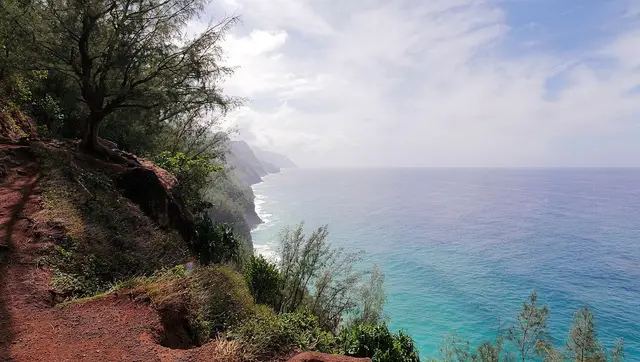
If a Na Pali boat trip is on your list, summer gives you the best chance. A boat gets you close to the sea cliffs and caves at water level, while a helicopter shows the whole coast and the valleys behind it. They show different things, and our comparison of helicopter versus boat along the Na Pali Coast helps you decide which you want, or whether you want both. For a boat option on the catalogue, there is a Na Pali Coast power catamaran tour; check the listing for the season and the departure harbour.
Crowds and prices
The calendar affects what you pay more than the weather does.
- Highest demand: the weeks around Christmas and New Year, and the summer school holidays. Expect fuller flights, tighter car supply and higher room rates.
- Middle: spring and the first part of the wet season outside the holidays.
- Easiest: the shoulder periods in spring and in autumn after the summer rush.
Prices on activities move less than on rooms and cars, but popular flights and boat trips still sell out on peak days. If you want a particular departure time, book earlier than you think you need to. For what a flight costs and what affects the price, see the helicopter tour cost guide.
A rental car is the other pressure point at busy times. Whether you need one depends on your plans, and our post on whether you need a car on Kauai covers it. For all the ways of moving around, see getting around Kauai.
Which side of the island for which season
Because rain follows the north-east trade winds, your base matters.
| Area | Typical pattern | Good to know |
|---|---|---|
| North Shore (Princeville, Hanalei) | Wettest and greenest, big winter surf, calm summer water | Beautiful in summer; winter can bring rain and closed beaches. See Princeville and Hanalei |
| East side (Wailua, Kapaa) | Frequent showers, lush, convenient central base | Near the river and waterfalls; see Wailua and Kapaa |
| South (Poipu, Koloa) | Driest and sunniest on most days, sheltered beaches | The usual winter fallback; see Poipu and Koloa |
| West (Waimea side) | Dry, sunny lowlands, cooler in the high canyon country | Gateway to the canyon; see Waimea Canyon |
If you stay for a week, you can split your time between sides and follow the weather. In winter, spend more time on the south and west; in summer, give the north shore its due. The where to stay guide goes into the pros and cons of each base.
What to pack for the season
The temperature range is small, but the conditions are not. Bring a light rain jacket in any month, because showers pass through even in summer. Sun protection matters year-round. A helicopter flight can feel cooler than you expect, particularly doors-off, so a thin layer is useful. Our what to wear on a helicopter tour guide has the specifics, and the packing list tool helps you build a list for your dates.
Planning your trip around the flight
Think of the helicopter flight as the fixed point and build the rest around it.
- Pick the flight type first. A standard island loop covers Waimea Canyon, the Na Pali Coast, the North Shore and, weather permitting, the Mount Waialeale crater, in about 50 to 60 minutes of flying. Our Kauai helicopter tours compared guide sets out the options.
- Place it early. Day one or two of your stay.
- Keep one flexible day. A spare day in the plan gives you room to rebook.
- Put weather-proof activities around it. Gardens, food tours, a luau and indoor stops hold up on a grey day.
- Save the water for the right side and the right season. Boats and snorkelling in summer on the north; the south in winter.
If your stay is short, the one-day itinerary with a helicopter flight shows how to fit a flight into a single day, and how many days to spend in Kauai helps you decide the length of the trip.
If the weather turns on the day
Plan for a morning phone call or message from the operator. Options usually include rescheduling, moving to another day, or a refund, depending on the listing’s terms. We cover the typical outcomes in what happens if your helicopter tour is cancelled. Do not assume; read the cancellation terms on the product page.
Season by season: a quick decision guide
- You want the best balance of weather and quiet: April to June, or September to early November.
- You want calm water and long days at the beach: summer, especially for the north side.
- You want whales, full waterfalls and a dramatic island: the winter months, with more flexibility in the plan.
- You are travelling at Christmas or New Year: book flights, car and rooms early, and schedule the helicopter flight for the first days.
- You are on a tight budget: avoid the holiday weeks and summer peaks if you can, and see free things to do on Kauai for days when you want to spend less.
- You are a first-time visitor: our first-time visitors guide pulls the basics together.
Tools that help
Before you lock in dates, the best time tool lets you compare periods at a glance. It is a planning aid, not a forecast: look at the actual forecast a week before you travel and again the night before a flight.
Tours to consider
If the flight is the centrepiece of your trip, these are good starting points. Always check the listing for the departure point, the aircraft, the seating and the cancellation terms.
- A deluxe waterfall safari helicopter tour from Lihue. On Viator, Kauai Deluxe Waterfall Safari: Helicopter Tour was listed from about $336 (Viator listing, November 2026). It is a one-hour listing with free cancellation.
- A sightseeing flight over Kauai. On Viator, Kauai Deluxe Sightseeing Flight was listed from about $159 (Viator listing, November 2026). Check the listing to confirm the aircraft before you book, because “sightseeing flight” can mean a small plane rather than a helicopter.
- A Na Pali Coast power catamaran tour if you are travelling in the calmer months and want the coast from the water.
For one more option, Viator lists Kauai Cessna Private Air Tour from about $189 (Viator listing, November 2026); the helicopter versus airplane guide explains when a small plane makes sense. If you are still weighing the cost of the whole idea, read is a Kauai helicopter tour worth it.
Tours for a first visit on GetYourGuide
Verified deep-linked GetYourGuide tours. Book through these links and we earn a small commission at no cost to you.
GetYourGuide does not provide a product photo for this activity — the image shows the meeting point, photographed by us.